
Bestsellers
Why Texas Longhorns Jerseys Are Burnt Orange
Nov
Texas Longhorns jerseys are burnt orange because the school spent roughly 80 years trying to find an orange that would not fade, clash or get confused with another team. The color fans see on Saturdays today came out of failed dyes, a student vote, a wartime shortage and a coach who wanted the darker shade back. Knowing that story makes it easier to read the different oranges you will see on Texas football jerseys, old and new.
1885: ribbons from a general store
According to Texas Athletics, the first UT baseball team bought orange and white ribbons at an Austin general store on the way to a game in Georgetown in 1885. Those were not yet the school colors on paper. For the next decade the school bounced around: early football uniforms in the 1890s were gold and white, orange came back in 1895, and the athletic association briefly switched to maroon because it hid dirt better than white.
The question was settled by a vote. Texas Athletics reports that orange and white won with 562 of 1,111 ballots, a majority of just seven. Maroon and orange and royal blue were the other options. So the color on a modern Texas Longhorns football jersey traces back to a very close election.
The fading problem
Winning the vote did not fix the dye. The Alcalde, the Texas Exes alumni magazine, notes that the bright orange of the era faded toward yellow over a season, which gave rivals an easy insult. Texas was also sharing orange and white with Tennessee, and a 1925 Daily Texan story described a new, darker orange meant to help Texas stand apart.
In 1928, coach Clyde Littlefield ordered a darker orange that would hold its color. The Alcalde says the shade was called “Texas Orange,” and the dye came from a German supplier. When that source dried up around World War II, teams went back to a lighter orange, and in 1950 a lighter shade became the color of the university seal.
Darrell Royal brings it back
The darker shade returned with Darrell K. Royal. Texas Athletics credits the coach with reviving burnt orange in the early 1960s, and the Alcalde says the former Oklahoma quarterback restored the deeper color after he arrived in Austin. Not everyone liked it. In 1966, a group of students and alumni petitioned the regents to go back to a lighter orange.
The darker side won. In 1967, after a faculty committee recommended it, burnt orange became the school’s standard shade.
What this means when you pick a Texas jersey
Expect small shade differences
Burnt orange is a narrow target. Screens, lighting and fabric all shift how it looks, so a jersey can read slightly brighter in one photo and deeper in another. Compare listing photos side by side rather than judging a single image on your phone.
Orange, white or an alternate
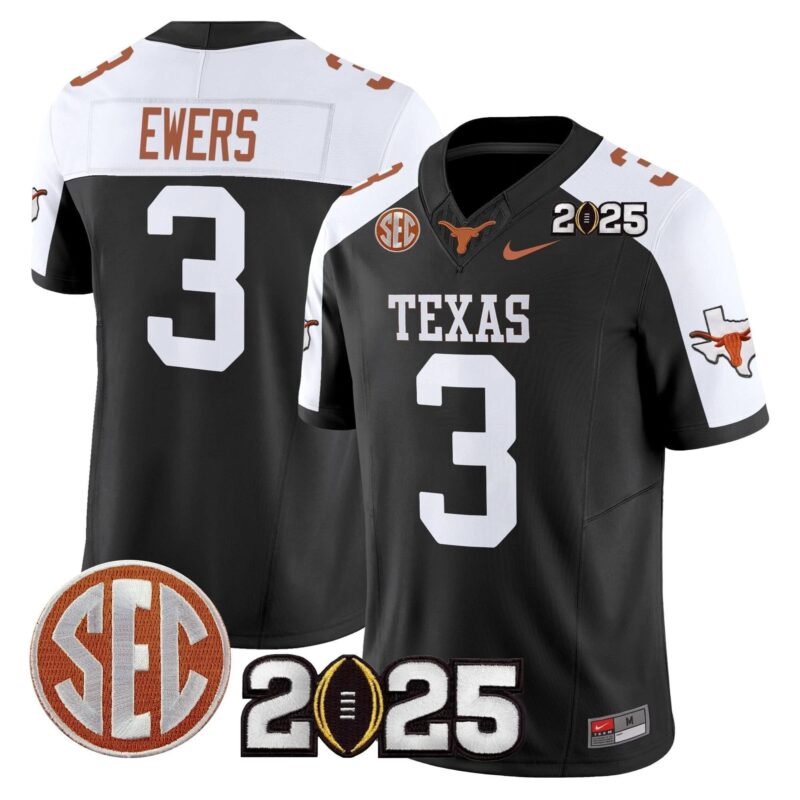
Most Texas Longhorns jerseys come in the burnt orange home look or the white road look. White jerseys use orange for the numbers and trim, so the color still carries the identity. Patch editions add another layer: the jersey in the photo above carries a 2025 CFP Final patch in its product name.
Your name in burnt orange
A personalized Texas Longhorns jersey lets you put your own name and number in the school colors. Some fans choose 85 for the year the colors first appeared, 28 for Texas Orange, or 67 for the year burnt orange became the standard. Others stick to a birthday or a family number. Any of them works as long as you know the story behind it.
Where to browse
See the full Texas Longhorns jersey collection for player and team designs. If you want a Texas jersey with your own name and number, start with the custom Texas Longhorns jersey page.
The burnt orange on a Texas jersey took decades of trial and error to settle. Wearing it on game day puts you in a long line of fans who argued about exactly how dark it should be.